
What does decolonisation mean for Africans?
Being "African" is more than just a geographical expression.

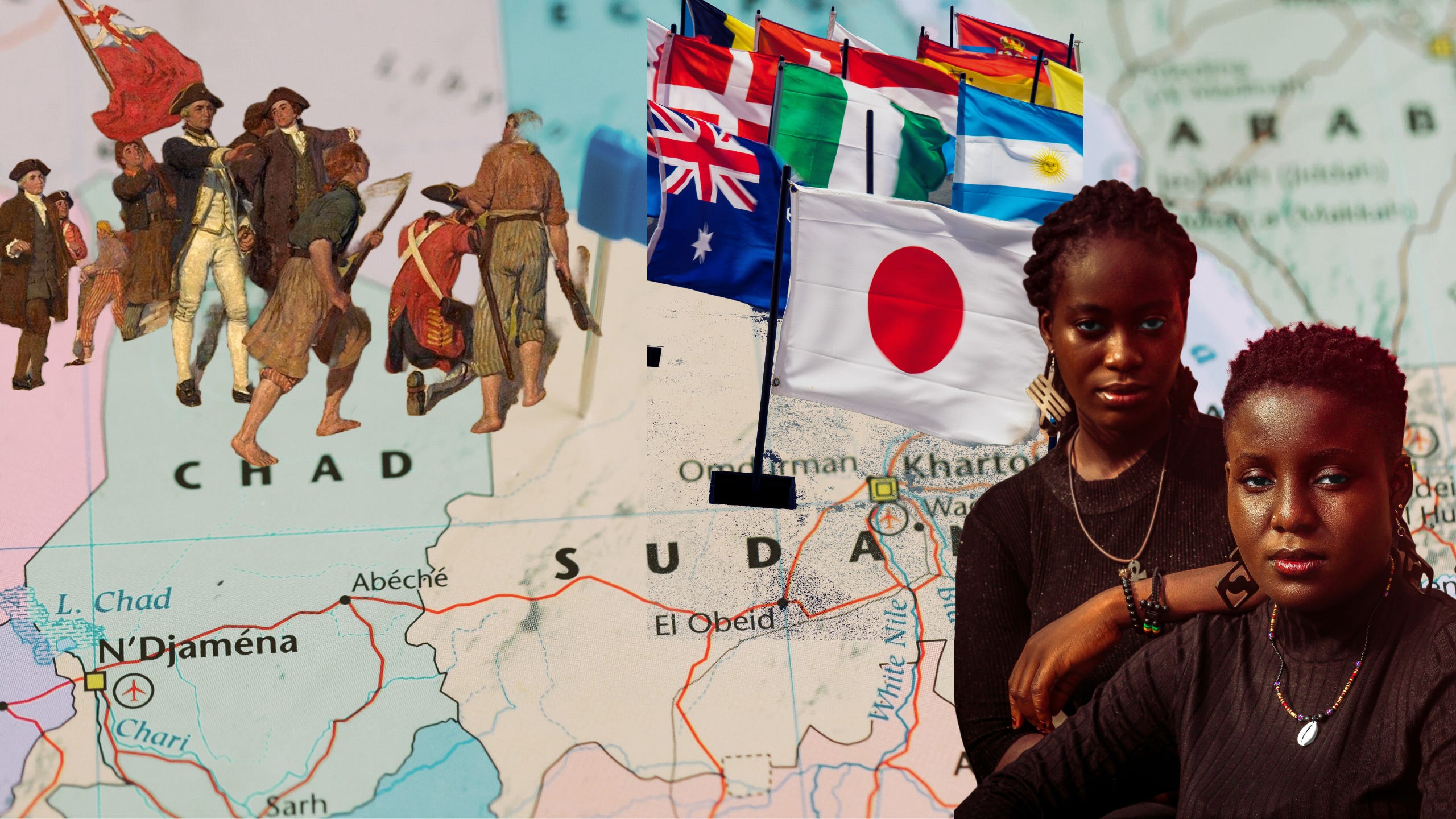
Decolonisation is a word that, like its predecessors that start out to disrupt, is facing the risk of losing meaning and being absorbed by the same colonial systems it challenges due to its rising popularity and how often it gets thrown around without context. Israel’s occupation and oppression of Palestine catalysed its widespread use with its ongoing colonisation of land and ethnic cleansing of a people in real-time, as the discriminatory narratives that hold up continuous exploitation — such as the notion that only “Arabs are terrorists” or that “Muslims are violent” — begin to fall apart.
Who are the terrorists if the people dying on the screen are Palestinian men, women and children, who are the terrorists if the hospitals and medical teams that aid the wounded are blown up and their patients burnt alive? Who are the terrorists if even babies are not spared from unwarranted bloodletting and violence? More importantly, where do you, as the viewer, stand in relation to all of that?
The consequences and effects of colonisation, especially on the African continent, is underexplored if not outrightly dismissed by celebrations of independences, and the lack of analysis of that time period in addition to the lack of information or hidden/destroyed documents compound an issue that is not even recognised as an issue.
As colonisation rages on in Palestine, Sudan and Congo, I have come to understand how decolonisation goes beyond the physical violence inflicted on lands and people by settlers and occupiers of territories into the idea that the mind is also a site of colonisation, and many of us are victim and yet, side with the oppressors, therefore becoming oppressors at the same time.


Our minds have been robbed of our own imaginations where our own people and communities set standards that make our lives easier and more beautiful and enable us thrive. Instead, they are replaced with the colonisers’ imagination where we continue to prioritise individual gain while normalising the degrees of our own and other’s exploitations and dehumanisation.
The West is the epicentre of imperialism, capitalism and colonialism, and so many Western countries have started to organise against the system of domination that is characteristic of many of these places that have, for so long, been considered as the home of civilisation and development by creating mutual aid networks and tackling the failures of the systems that profit off the labour and exploitation of the majority for the benefit of the 1%.
On Palestine, there have been protests even beyond the schools and streets of Western countries into Asia—such as in Japan and South Korea. However, the voices of colonised people in Africa against this occupation are few and far between, and South Africa’s bid to order Israel to stop its military offensive in Rafah due to its genocidal character is one high-level action I can point to.
Even when protests are done, it is more out of religious sentiment which tends to inflame already existing religious tensions, that are then met with force and quelling of these protests, rather than inspiration for solidarity and antiwar protests among various tribes and religions as people who have and continue to experience the worst of colonisation.
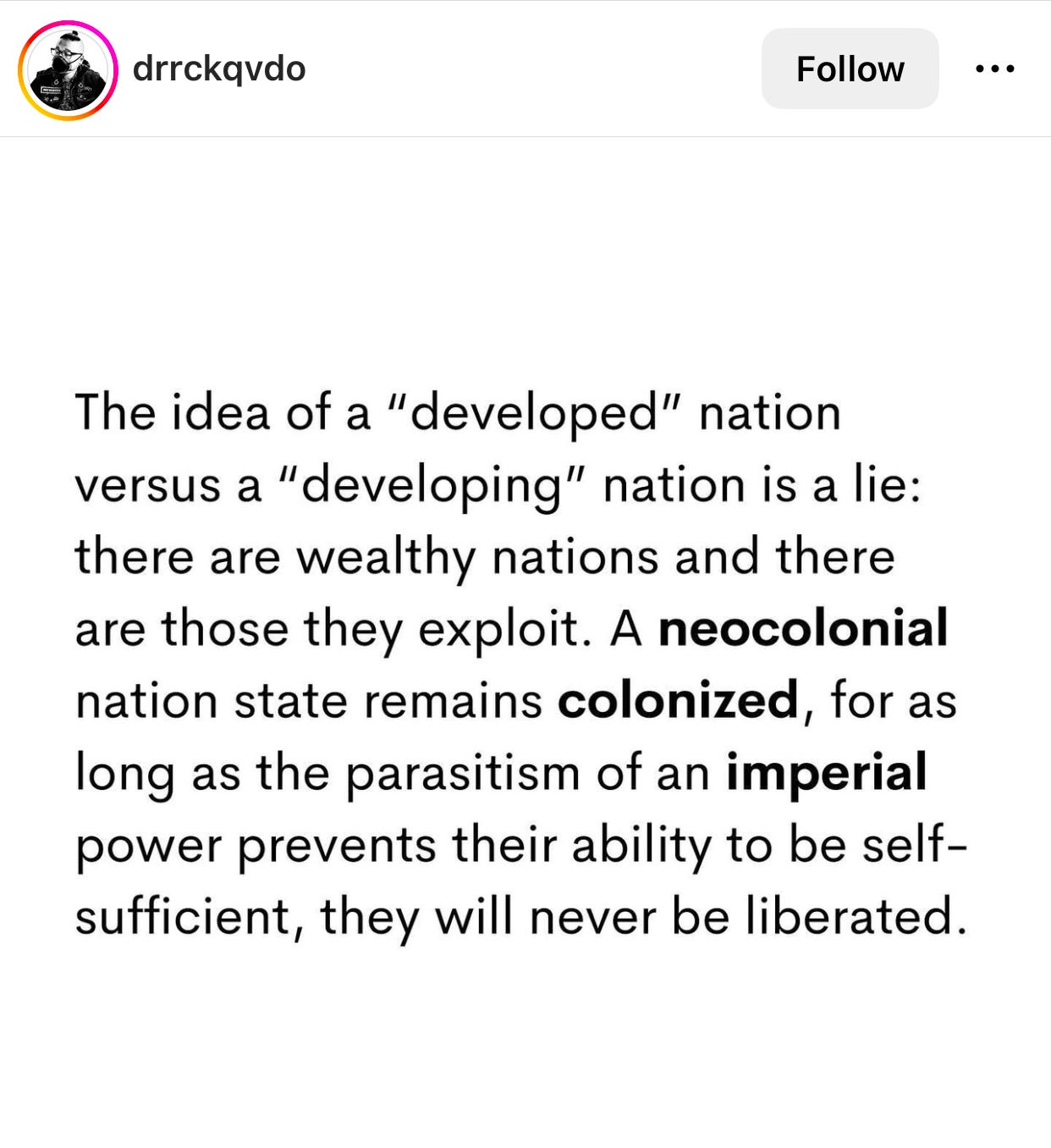
For many African countries—which are the centres of exploitation—the thread does not easily connect. Even more so when anti-black rhetorics are found even in movements that seek liberation such as in Ukraine where international students were discriminated against by Ukrainians, denied housing, transport and other amenities, while both were seeking safety from Russia’s war.
If there’s a war in Palestine, and you stand with Palestine, but that does not mean that Palestine stands with you, how does that affect where you stand? If the world stands with Palestine, but finds it difficult to stand with Congo and Sudan, where does that leave you and your politics?
Maybe we don’t need to worry that far at the moment but let’s come back to the continent for a second:
There’s a war in Sudan? Nigerians look forward to their Dubai vacations and take more fault with the fact that we are banned from the list of those who can travel to the country.
Cameroon is removing French bases from their countries? Should that mean anything for the surrounding nations?
What is the business of the Sudanese with other Africans? Or the DRC with Nigeriens? Or Algerians with Nigerians?
What it means to be “African”
At first glance, which is how many of us come to understand ourselves in relation to the African continent, the concept of “being African” seems to mean, belonging to a geographical category.
I am Nigerian, Nigeria is a place in Africa, therefore I am African. This identity doesn’t have to prove it is interconnected with others who identify as African, it just simply has to be in or from Africa. There isn’t much knowledge or pathways that tie one place in Africa to another, and if there are, they are not easily explored—it remains harder to travel within the continent than to travel outside of it. And yet, we are “African” by place — or so we think.
However, this is not how the concept of being African is perceived externally, both during colonisation and now.
First, the similarities between the ways Africans were perceived during physical occupation of lands and slavery, and now during ongoing genocides and exploitation.
While many African tribes saw themselves and their internal politics as clearly different from the next village, it wasn’t until many were grouped together and bound on a ship sailing West that they realised that there were differences in how they perceived themselves and how the foreigners did.
There are clear differences between the Nigerians and the Ghanaians, and between the Zimbabweans and the Ugandans, just as there were clear differences between the tribal entities that were forcefully amalgamated by colonial forces, but these differences are only known to or experienced by the people who are African, by which I mean, the people who were united by their resources which were and are scrambled for by Western nations, and who now bear similarities from the resulting conflicts and poverty arising from those actions across carefully drawn borders.
Ghana’s jollof rice may taste different from Nigeria’s jollof rice, but the greed, privatisation and indiscriminate extraction of gold and petroleum products from each of these regions will yield results that unite these two different regions in poverty and suffering, producing similar societal and cultural habits such that it becomes difficult for the outsider to tell the two apart.
Being African thereby becomes more than just a location on a map, but rather a culmination of economic and societal similarities defined by exploitation, greed and self-serving interests.
And if we were to look for proof of this monolith narrative, look no further than to the North of the continent that is somewhat distanced from the “African” identity, where it becomes debatable whether one is African or Arab, as if those two identities cannot exist side by side.
I will say that “African” as an identity does not begin to exist until one either steps outside the continent or encounters the outsider, usually coloniser, who sees “Africa.”
Many Nigerians, Congolese, Kenyans, and the many diverse nations of people who make up the continent are clueless about what it means to be African in this sense (look to Burnaboy who speaks much about “Africa” but whose music is only filled with Nigerian sensibilities and references), just as much as the North Africans often distance themselves or do not easily identify as being African—which is actually on par with other geographical entities around the world. What’s more, many of us are actually local to the places we reside rather than national, which is a concept brilliantly explored by Taiye Selasi in her talk - Don’t Ask Where I’m From, Ask Where I’m a Local
Places are not just defined by their boundaries and are easily just as forged by relations to power, domination and discrimination such as in the specificity of South East Asia rather than the whole Asia. It is in the way that we forget that Russia is part of Asia and that Europe is not a continent. And in the way we think of the United States as America when the continent consists of the North, Central and South. The geographical location of communities and nations has never been the issue or had any need to be emphasised, except power is being discussed—whether it is soft power, nuclear power, or physical power.
As such, it is okay to be just Nigerian, Congolese, or South African, without imposing an African identity in the same way it is okay to be French, American or Italian without imposing a continental identity everywhere you go.
However, the unique circumstances that see many Africans living in poverty and facing discrimination and displacement bring about the need to be Pan-African in politics and identity, as the external pressures of exploitation and domination are “African” and need to be understood and tackled as such.
Can Africa be decolonised?
Since many African nations “gained” independence from colonial powers, there have been annual celebrations of the physical relocation of colonial masters back to their homes. But the structures that these colonial powers built have continued to produce the resources that power much of the world and the so-called globalisation and “1st-world” status of many countries.
The school curriculums continue to teach of British lords and mistresses who found, named and discovered something, like they were the heroes who established and gave form to places where there was nothing but darkness and savagery.
What’s more, this era of putting black, Indigenous men and women in uniforms and sending them off to boarding schools to learn a language and get civilised is looked upon romantically as “when things were good” by the descendants of these African people (in fact, earlier this year, Nigeria reversed its national anthem to the version created by colonisers), as many bemoan the current decrepit situations of many African countries and economies.
Structures carved and moulded together for the benefit of the Germans, British, Spanish and French simply transferred ownership during heavily influenced elections that were supposedly democratic, and these have continued to work as intended by their masters.
But if “Africa” did not exist before colonisation—if Nigeria did not exist before colonisation, does decolonising these entities mean that the borders that were decided by the Germans in 1885 will be disintegrated? Will each African nation go back to being a decentralised collection of tribes and communities?
Can they?
Even if they can, there is too much riding on the Western exploitation of colonial constructs in Africa for it to be done peacefully. And yet, many continue to die from suffering, poverty and wars that the maintenance of these systems requires.
The most tragic thing though, is that the ways of thinking and being that these constructs generate are normalised by the people, like me, from indigenous tribes, who have gone on to be Nigerian, Cameroonian, or other colonial entity, who have gone on to be African, and who have gone on to be black.
The Colonised Indigene
We hear a lot about Indigenous tribes, of people who are natives of a place like the Maasai people of Kenya and Tanzania, or the Yorùbá people of Nigeria.
When I think about indigenes, I have been struggling to identify people from various tribes who still live in their homelands in the same sense, even though they are just as indigenous to the places they are from.
Indigenes understand the plants, trees, animals and birds that are local to their vicinities, know how to keep their health in sync with the seasons, fruits and cycles, and work to protect the lands that they exist with. This synchronisation was seen in the ways black, Indigenous men and women wore their hair without any difficulty, with exquisite, intricate hairstyles and no signs of alopecia, in the ways we maintained our bodies without needing a gym, in the ways our homes cooled us down rather than heating us up. However, on the same lands our ancestors walked, we experience difficulty and fatigue with dealing with our own hair, we are dying from heatwaves and having to innovate ways to cool down concrete—a building material that colonised our living environment, and we no longer have to know where our food comes from.
In many African communities and tribes, we do not address the effects of colonisation that are present and have festered in our communities—often individualising them as personal failures and religious matters rather than a deliberate systemic injustice. If there is any work that is done, it is against the betterment of the communities and people within them. And oftentimes, the end result is empty villages and homes as more people leave their local communities and entire countries in droves in search of better livelihoods and dignity.

We also experience a lack of synchronisation in medicine as we are on our way to completely losing and demonising herbal knowledge of local plants and roots that are able to heal various ailments while overly depending on imported pharmaceuticals. While they have their benefits, it is important to remember how and for whom they were introduced—for colonisers who only became able to penetrate swampy, Indigenous lands once they had innovated for colonisation by developing a drug that healed them from malaria infections.
This lack of synchronisation is seen in the way we do not consider our own lives as worth anything, placing more value on white lives that are secured with sirens while they work for governments that continue to exploit the lands, rivers and seas. In the end, we experience the phenomenon of being from a place but not of a place (how similar this is to the glorified Christian sentiment of being from the world but not of the world), and in essence, working against the good of the place and the people who come from that same place, which I have come to identify as the colonised indigene.
As long as you are from a colonised place, no one is exempt from the status of the colonised indigene — we’re all victims of colonisation and products of the society we were born into. We have all sold out at some point in service of a belief that was put there by colonial forces whether by schooling, religion, or by structure, whether by our nonchalance or our actions.
If the people from Nigeria’s Niger Delta protest oil spills, exploitation and environmental degradation by destroying oil pipelines, do we see ourselves in them or do we see them as troublemakers? If the people in Sudan continually point to the UAE’s engineering of conflict, does that affect how you spend the money allocated for your Dubai vacation or does that not apply to you?
It seems to be that we have to understand ourselves as “African” first, to understand the connections of exploitation and injustice, to challenge rather than distance ourselves from discrimination, to see ourselves not as a well-to-do class no matter how well-off, but as a group that is being profited against and only as well-off as someone else who is paying more of the price for your convenience, before we can do the work to deconstruct decolonial systems that continue to profit off the pauperisation and discrimination of black people, even within liberatory movements.
This was a lovely read. You offered some really helpful framing around places (and thus identities) not just being defined by their physical boundaries but also by relations to power, domination, and movement of capital. I think this is really helpful for helping us see that a decolonial turn upsets the very definition of what it means to be African and of African nationalities. I think this recognition helps us build pan-African solidarity, which is just the beginning of generating a collective decolonial shift.